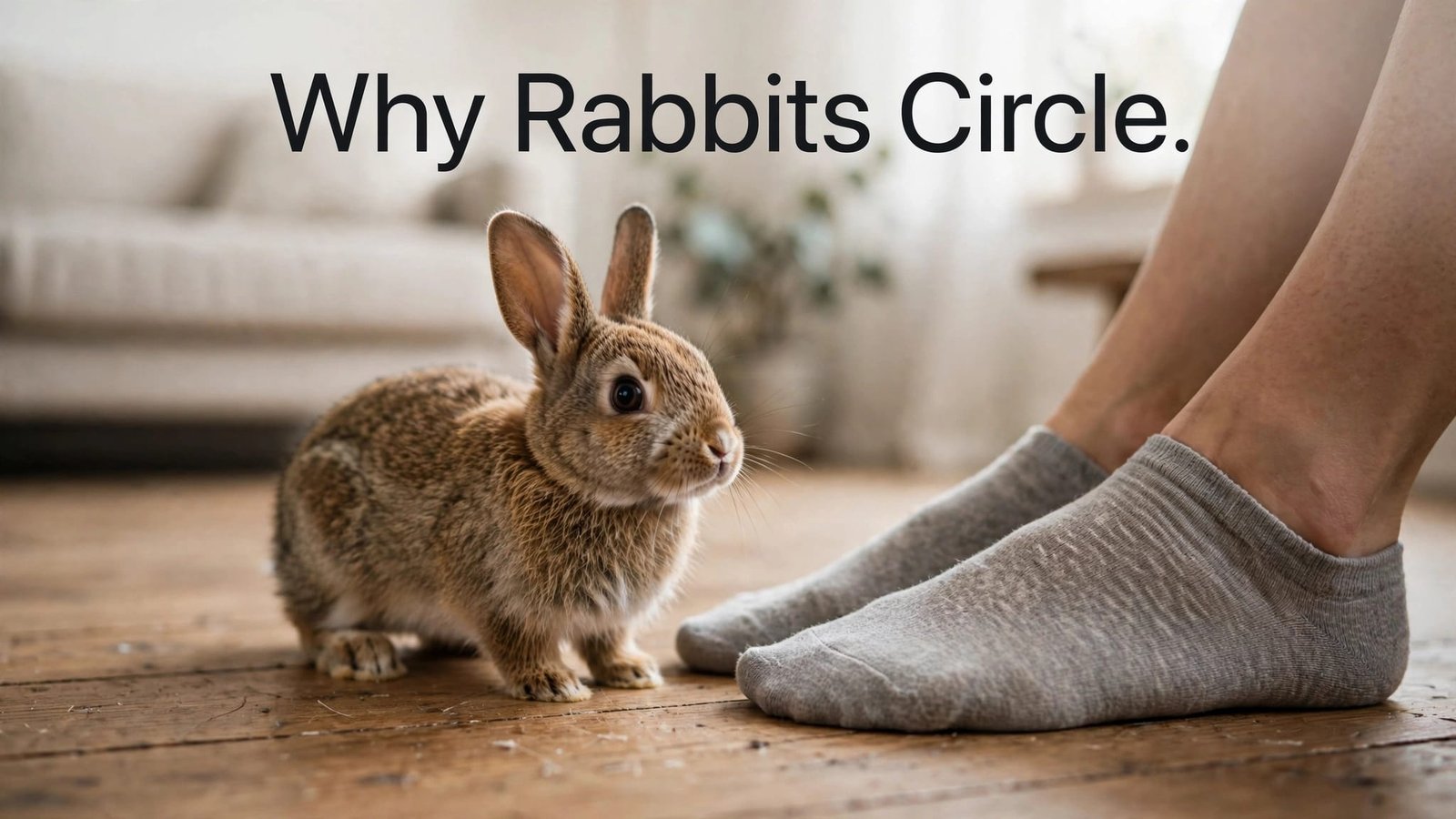
Your rabbit usually circles your feet because they’re excited, expecting food, or showing hormone-driven courtship behavior. Relaxed circling can be a friendly greeting, especially with soft honking, buzzing, or little hops.
The important clues are your bunny’s body language, the situation, and whether they’re moving comfortably. Circling with stumbling or a sudden appetite change needs a different response than happy laps before breakfast.
Start by watching what happens just before your rabbit circles you.
A quick guide to your rabbit’s circling
You don’t need to work out the cause from circling alone. Look at the whole picture, including your rabbit’s appetite, balance, and usual routine.
These common patterns can help you choose your next step.
| What you notice | Likely explanation | What to do |
|---|---|---|
| Loose movement, soft honking, little hops | Excitement or friendly attention | Enjoy the greeting and move carefully |
| Circling before meals or when you stand up | Food anticipation | Reward a calm pause before serving |
| Mounting, spraying, repeated ankle nips | Hormonal courtship | Discuss spaying or neutering |
| Long, repetitive laps in a restricted area | Boredom or frustration | Improve space and enrichment |
| Sudden tight circles, head tilt, stumbling | Possible medical problem | Contact a rabbit-savvy vet promptly |
These are clues, not a diagnosis. A new pattern deserves attention, even if your bunny has always enjoyed circling.
Why is your rabbit circling your feet?
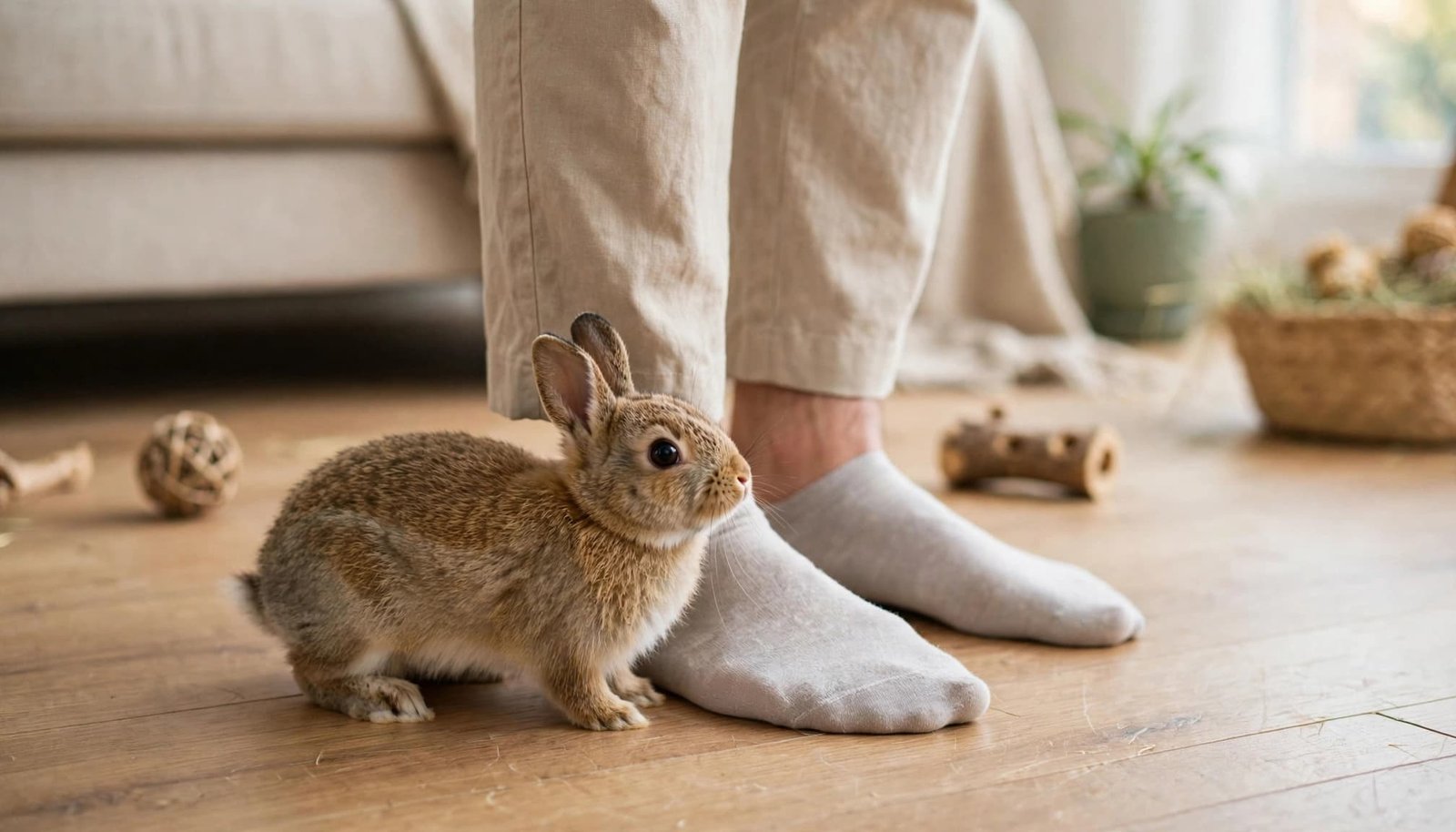
Your bunny is happy to see you
Some rabbits circle when you enter the room or settle down nearby. You might hear a soft honk or buzzing sound. Little hops, playful running, and relaxed resting afterward can also suggest excitement.
Your bunny may be asking for attention or enjoying your company. Let them approach, and offer gentle forehead strokes if they already enjoy petting.
Circling alone doesn’t prove affection. Look for other comfortable behaviors, such as choosing to sit beside you or grooming you. Our guide to how rabbits express affection covers more signs of trust.
Your rabbit expects food or attention
Rabbits learn daily routines. Standing up might mean you’re heading toward the pellet container. A rustling bag can sound like snack time!
If your rabbit circles whenever you leave the sofa, notice where you usually go next. Your movement may have become a reliable food cue.
Keep meals predictable, and wait for a brief calm moment before opening the enclosure or offering a treat. This helps your bunny learn that calm behavior gets attention. Don’t delay essential food or restrict hay and water as a training method.
When circling is hormonal courtship
An intact rabbit may run around your ankles as a mating display. Both males and females can show hormone-related behavior.
Repeated mounting, urine spraying, and persistent nipping can point to hormones and territorial behavior. Chin rubbing may appear too, although rabbit chin marking is also normal scent communication.
When does a rabbit reach sexual maturity?
Sexual maturity can begin around 3 months in small breeds, while larger breeds may mature closer to 6 months. Sexual maturity timing varies by rabbit, so don’t assume a young rabbit can’t breed.
Many rabbits are spayed or neutered between 4 and 6 months, but the right timing depends on development and health. Discuss when to spay or neuter with a rabbit-savvy veterinarian. Rabbit.org’s spaying and neutering guidance explains that females may be ready around 4 months, while surgery is often scheduled nearer 6 months.
Choose a rabbit-savvy veterinarian experienced in rabbit anesthesia and surgery.
What changes after spaying or neutering?
Neutering often reduces spraying, mounting, aggression, and territorial behavior. In males, improvement commonly develops over about 4 to 8 weeks as hormones settle. Learned habits can take longer.
The Rabbit Resource’s spay and neuter information describes the health and behavioral reasons for these procedures.
Early recovery often takes about 7 to 10 days, but full healing and activity restrictions may last longer. Follow your vet’s recovery plan. Poor appetite after surgery needs prompt veterinary advice.
Your bunny can still run over happily afterward. Surgery doesn’t remove their personality or stop every friendly greeting.
How do you stop ankle nipping safely?
A quick nip may mean “move,” “notice me,” or hormone-driven excitement. Hard bites, repeated gripping, or broken skin need closer attention.
You don’t need to punish your bunny or tolerate repeated nipping. Try this calm response:
- Pause before moving. Locate your rabbit before standing or walking. Take slow, short steps or shuffle carefully when they’re close, without pushing them with your feet.
- Offer another activity. Place a rabbit-safe toy nearby. A small food reward can help redirect attention, but wait for a pause so it doesn’t immediately reward a nip.
- Reward a comfortable distance. Offer attention when your bunny settles beside you or explores away from your ankles. Keep responses consistent.
- Make the area predictable. Keep a clear walking route and place a tunnel or foraging activity away from your usual path.
If your rabbit nips while you’re sitting, avoid jerking your feet around or starting a chase. That reaction can become an exciting game. Place a toy within reach before sitting down.
If nipping happens while you clean or refill supplies, your bunny may be guarding their space. Stress or discomfort can also contribute. Let them leave the area first when possible. Never withhold hay or water, shout, or tap their nose.
A sudden increase in biting also deserves a health check, especially with hiding, reduced movement, or poor appetite.
Could repetitive circling mean boredom?
Circling around you during a greeting is different from repeatedly following the same route inside a small enclosure. Consider how long it lasts, whether your rabbit can choose other activities, and how much daily exercise it gets.
Happy binkies and zoomies look different
A true binky includes a jump with a mid-air twist or kick. Your bunny’s body usually looks loose, with relaxed ears between movements. Playful behavior can include quick bursts of activity.
Zoomies are quick running bursts, sometimes mixed with binkies.
Play may happen in brief bouts, perhaps 1 to 3 minutes, but there’s no fixed duration. Zoomies often last only a few minutes, and each jump lasts just a moment.
Boredom-related circling tends to stay flat, repetitive, and prolonged, unlike brief zoomies. However, you can’t diagnose boredom from movement alone. Limited options or too little enrichment can add stress. Sudden or unbalanced movement needs veterinary attention.
Give your bunny room to explore
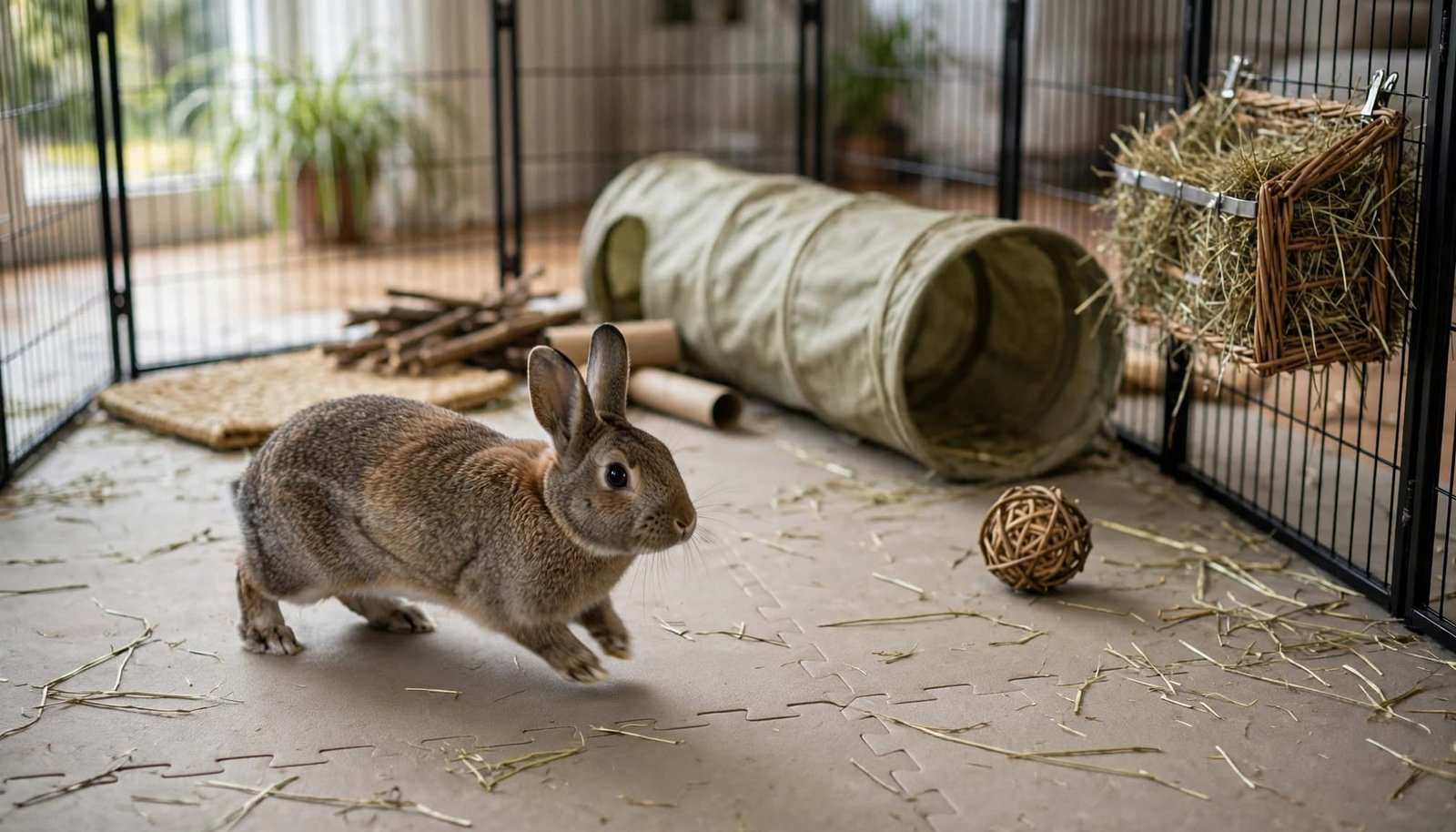
Provide at least 3 hours of daily free-roam exercise as a starting point. Assess your bunny’s daily exercise and offer longer access whenever possible. A spacious, connected exercise area is better than long confinement followed by a short outing.
The old cage rule of four times your rabbit’s body length isn’t a complete housing standard. Your bunny needs room to run, stretch, stand upright, and explore.
Even in an apartment, a rabbit-proofed pen and open floor area can provide room for safe exercise. Add tunnels, hideouts, and safe chew toys. Our first-rabbit care guide includes helpful housing basics.
When does circling need a vet?
Contact a rabbit-savvy veterinarian promptly if your rabbit suddenly starts circling tightly, especially in only one direction. A head tilt, stumbling, falling, rolling, or unusual eye movements are warning signs.
A rabbit can choose the same direction during ordinary play. The concern is persistent, unusual circling, particularly when balance or normal activity changes.
Head tilt can result from an inner ear infection or Encephalitozoon cuniculi, usually called E. cuniculi. PDSA identifies these as the two most common head-tilt causes. Less common causes include brain lesions or a stroke. You can’t tell which cause is responsible by watching alone.
Refusal to eat, fewer droppings, a hunched posture, or painful tooth grinding also need urgent attention. Don’t wait until tomorrow when reduced eating and fewer droppings happen together.
While arranging care, keep your bunny in a quiet, secure area without heights or slippery flooring. Avoid chasing them to record a video. A short clip can help your vet if you can take it without delaying care.
Don’t give human medication or start force-feeding unless your veterinarian directs you.
Key takeaways
- Relaxed circling often means excitement, food anticipation, or friendly interest.
- Mounting, spraying, and persistent nipping suggest a hormonal contribution.
- Redirect ankle nipping calmly, then reward a pause or another activity.
- Repetitive enclosure laps call for a review of space and enrichment.
- Sudden circling with poor balance or appetite changes needs prompt veterinary care.
Helping your bunny feel happy and safe
Your rabbit’s circling makes more sense when you notice what happens before and after it. A relaxed greeting calls for careful footsteps and patient attention.
Keep routines predictable, reward calm behavior, and give your bunny room to explore. When circling changes suddenly or comes with illness signs, veterinary care is the right next step.
Frequently asked questions
Why does my rabbit circle my feet when I stand up?
Your rabbit may expect food, playtime, or attention because standing up often comes before those activities. Hormonal rabbits may also follow and circle moving legs. Pause before walking so you can see where your bunny is.
Will neutering stop circling and spraying on furniture?
Neutering often reduces hormone-driven circling and urine spraying, but neither behavior is guaranteed to stop completely. Friendly circling can remain. Persistent spraying after recovery may involve learned habits, stress, or a health problem.
Can a rabbit recover from head tilt?
Many rabbits improve with treatment, and some live comfortably with a lasting head tilt. Possible causes include E. cuniculi, and the outcome varies with the cause and severity. Rabbit.org’s head-tilt care guidance explains why veterinary treatment matters.