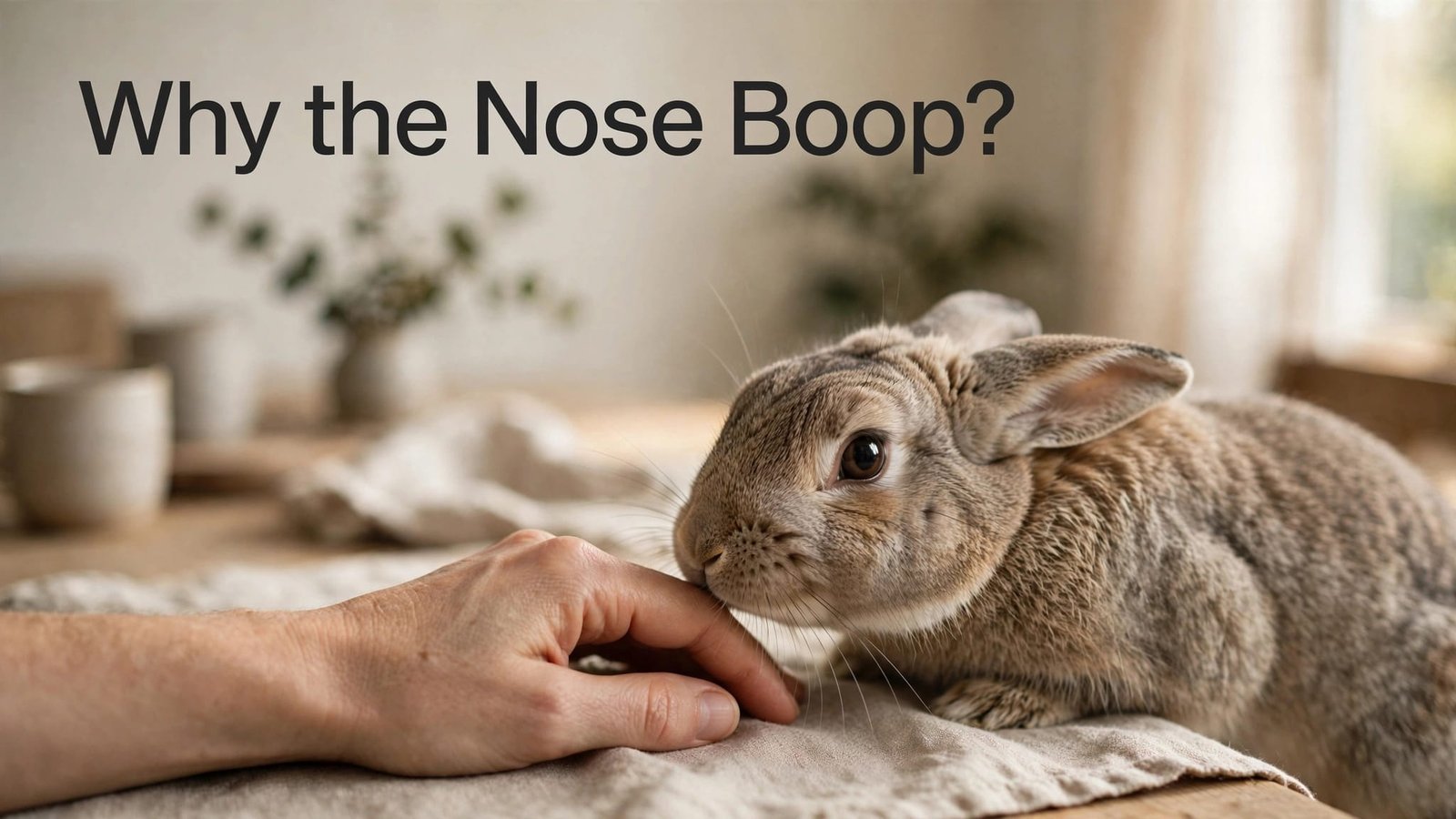
Your rabbit may nudge you as a greeting or to ask for attention, petting, food, or room to pass. Rabbit nudging can also express curiosity or frustration, so what happens next is your best clue.
Most nose boops are normal communication. Start with your bunny’s posture, the timing, and whether they settle after you respond.
Key Takeaways
- Watch the whole interaction, not the nose boop alone.
- Offer gentle attention or space before frustration turns into nipping.
- Appetite loss and fewer droppings need urgent veterinary advice.
What Rabbit Nudging Means
Your rabbit is a prey animal and usually relies on body language as its main form of communication rather than sounds. The RSPCA’s rabbit body-language guide helps you recognize relaxed and worried postures.
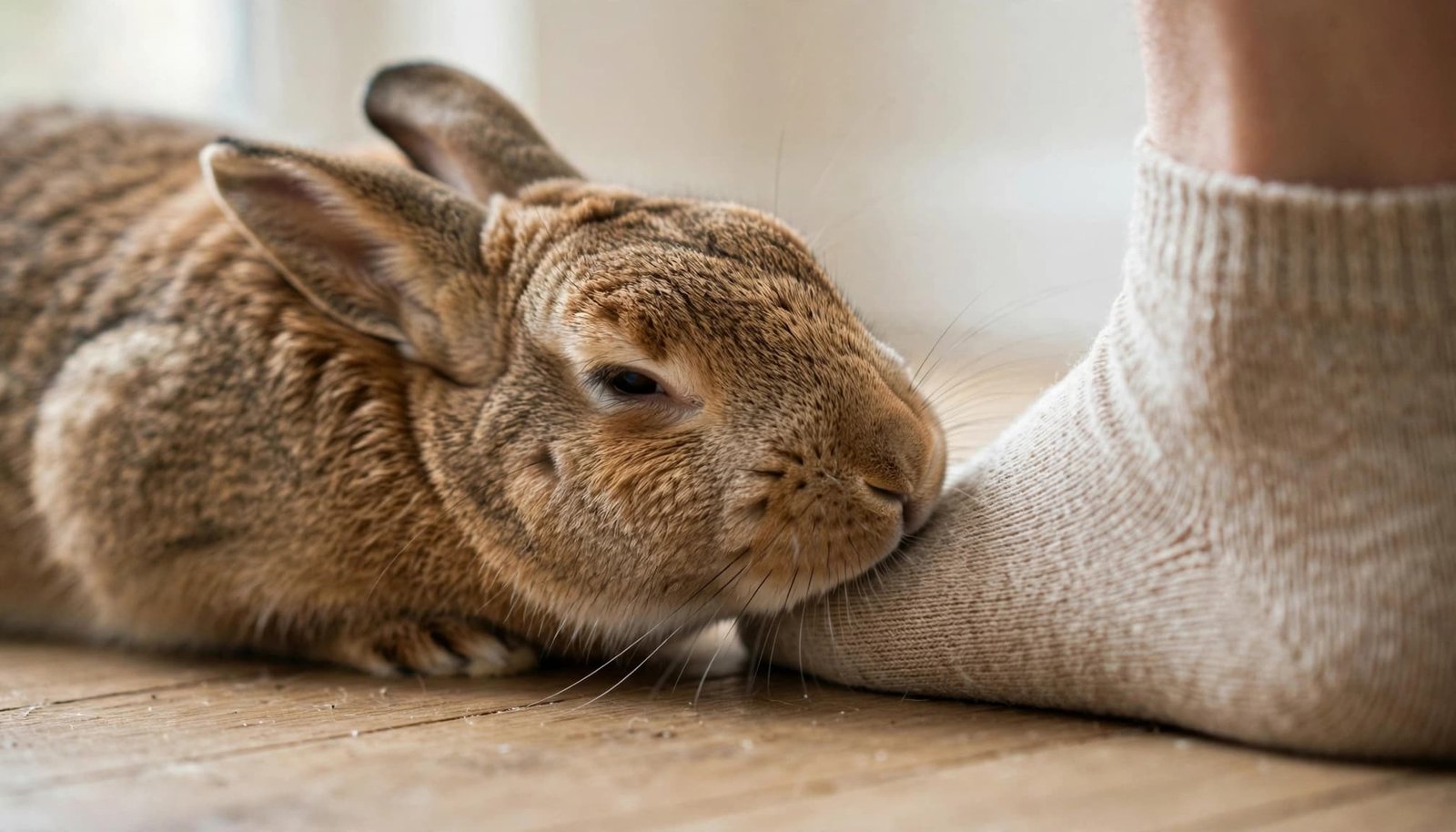
Use these clues to understand your bunny’s request.
| What you notice | Likely meaning |
|---|---|
| Gentle nudge, then lowered head | A request for head rubs |
| Firm, repeated shove into your leg | You’re blocking their path |
| Nudge followed by licking | Grooming and bonding |
| Nudge, then a relaxed flop nearby | Comfort and trust |
| Nudging with digging at you | Impatience or frustration |
| Nudging near feeding time | A food request or routine reminder |
| Sniffing and nudging something unfamiliar | Curiosity |
A nudge alone doesn’t prove affection. Licking, relaxed company, and choosing to approach you tell you more. Our guide to how rabbits express affection covers these friendly signals.
How Should You Respond to a Nudge?
Offer Petting or Clear the Path
If your bunny lowers their head and stays relaxed, offer gentle forehead strokes. Pause after a few strokes. Staying close or lowering their head again suggests they’d like more.
Stay on the floor and let your rabbit approach. If they turn away or move off, stop petting. You don’t need to pick them up to offer affection.
A firm, persistent ram, sometimes nicknamed the “fuzzy linebacker,” usually means you’re in the way. Move your foot or shift aside. Don’t keep blocking them to see what happens.
Keep Food Requests Predictable
Your bunny learns routines and may nudge when an expected treat time passes. Giving banana or apple treats after every shove teaches them that pushing gets snacks.
Keep treats small and occasional. Reward a calm pause instead of increasingly forceful nudging. Never withhold hay, water, or necessary meals as training.
What If Your Rabbit Keeps Nudging You?
Check Their Everyday Needs
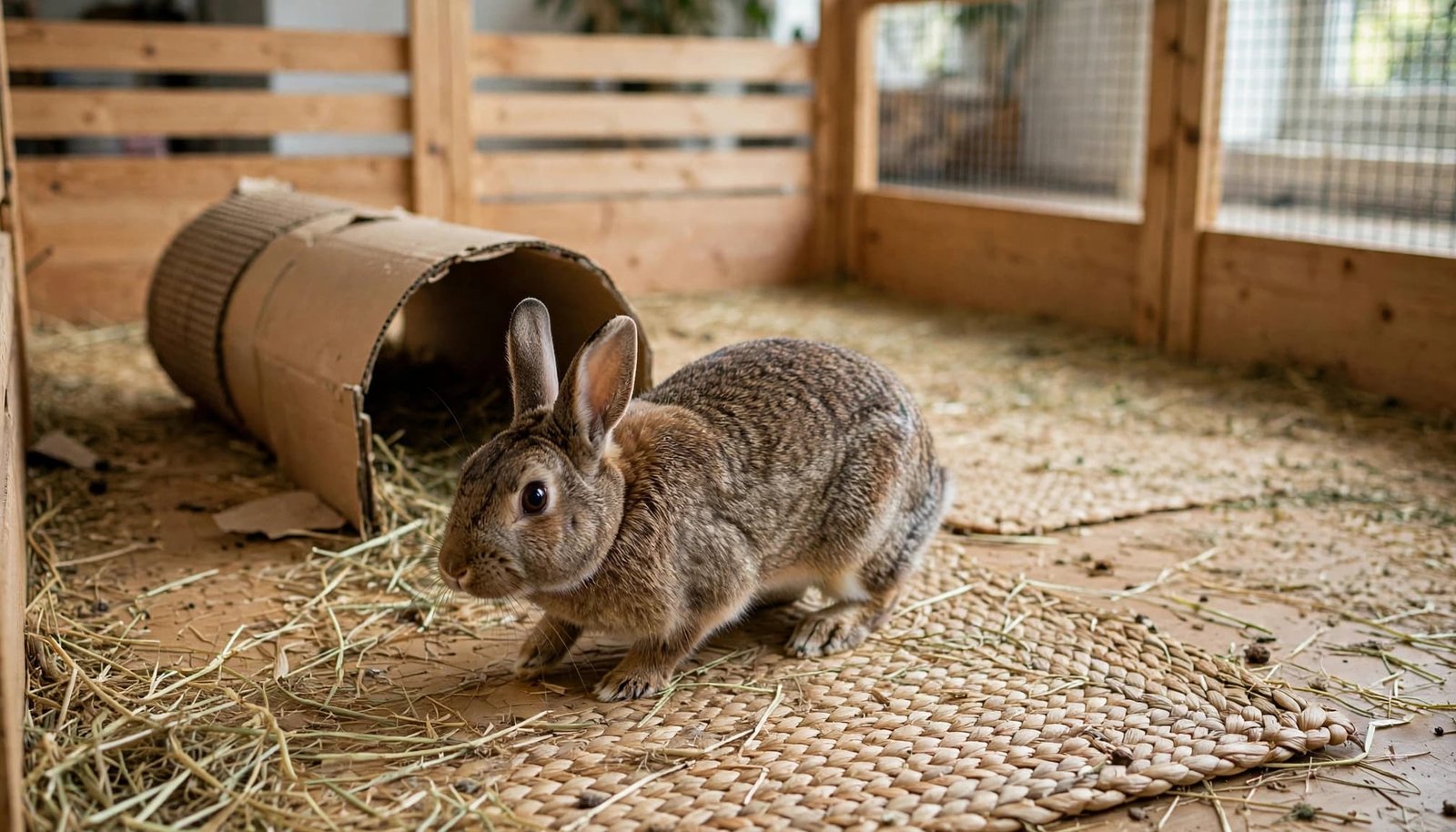
Constant nudging can mean your bunny wants company or needs more to do. First, check hay, water, room to move, and opportunities for interaction.
Offer more rabbit-proofed floor space and foraging activities. Our guide to rabbit-safe play and chew toys includes simple ways to keep your furry friend busy. A compatible bonded rabbit companion can help with loneliness, but introductions need careful bonding.
Once those needs are met, offer a short play session, then a safe activity nearby. Reward settling beside you with gentle attention. Don’t ignore repeated nudging when your rabbit seems uncomfortable or their habits have changed.
Look for Frustration or Fear
A bored rabbit may repeatedly seek interaction while still eating and exploring. A tense rabbit who freezes, retreats, or avoids touch may need a quieter setting and space. One behavior can’t diagnose either.
Gentle nips without tense posture can be normal communication. Hard biting, lunging, growling, or pinned ears suggest fear, stress, or territorial defense. Biting with aggressive circling can be territorial, especially in unneutered males.
Withdraw calmly rather than shouting or tapping their nose. Our guide to why rabbits bite and how to respond offers more help.
When Should You Contact a Rabbit-Savvy Vet?
Call a rabbit-experienced vet immediately if your normally social bunny suddenly stops nudging and hides or refuses food. Sudden increased nudging with appetite loss or lethargy also needs attention.
Watch for these warning signs:
- Refusing food or producing fewer, smaller, or no droppings.
- Unusual weakness, persistent hunching, loud tooth grinding, or a swollen-looking belly.
- Breathing difficulty, collapse, or watery diarrhea, which require emergency care.
The University of Illinois GI stasis guidance identifies reduced appetite for more than four hours, treat refusal, and abnormal droppings as concerns. Call early rather than waiting for a time limit.
A shy bunny may hide but still eat and poop. Withdrawal with appetite or droppings changes isn’t something to wait out overnight.
Rabbit Nudging FAQs
Why Does My Bunny Nudge My Foot?
Your foot may be blocking a familiar route, or your bunny may want your attention. Shift aside first. If they pass through, you’ve answered their request. If they stay and lower their head, they may want petting.
Why Does My Rabbit Nudge Me Then Run Away?
Your bunny may be inviting interaction, investigating you briefly, or heading toward something they want. Watch where they go and whether they look relaxed. Let them return on their own rather than chasing them, especially if they retreat into a hideout.
Understanding Your Bunny’s Nose Boops
Your rabbit’s nudge makes more sense when you notice their posture and follow-up behavior. Gentle head lowering calls for a different response than a determined shove at your ankle.
Offer attention, space, or enrichment according to the situation. Keep appetite and droppings in mind whenever your bunny’s usual behavior changes.