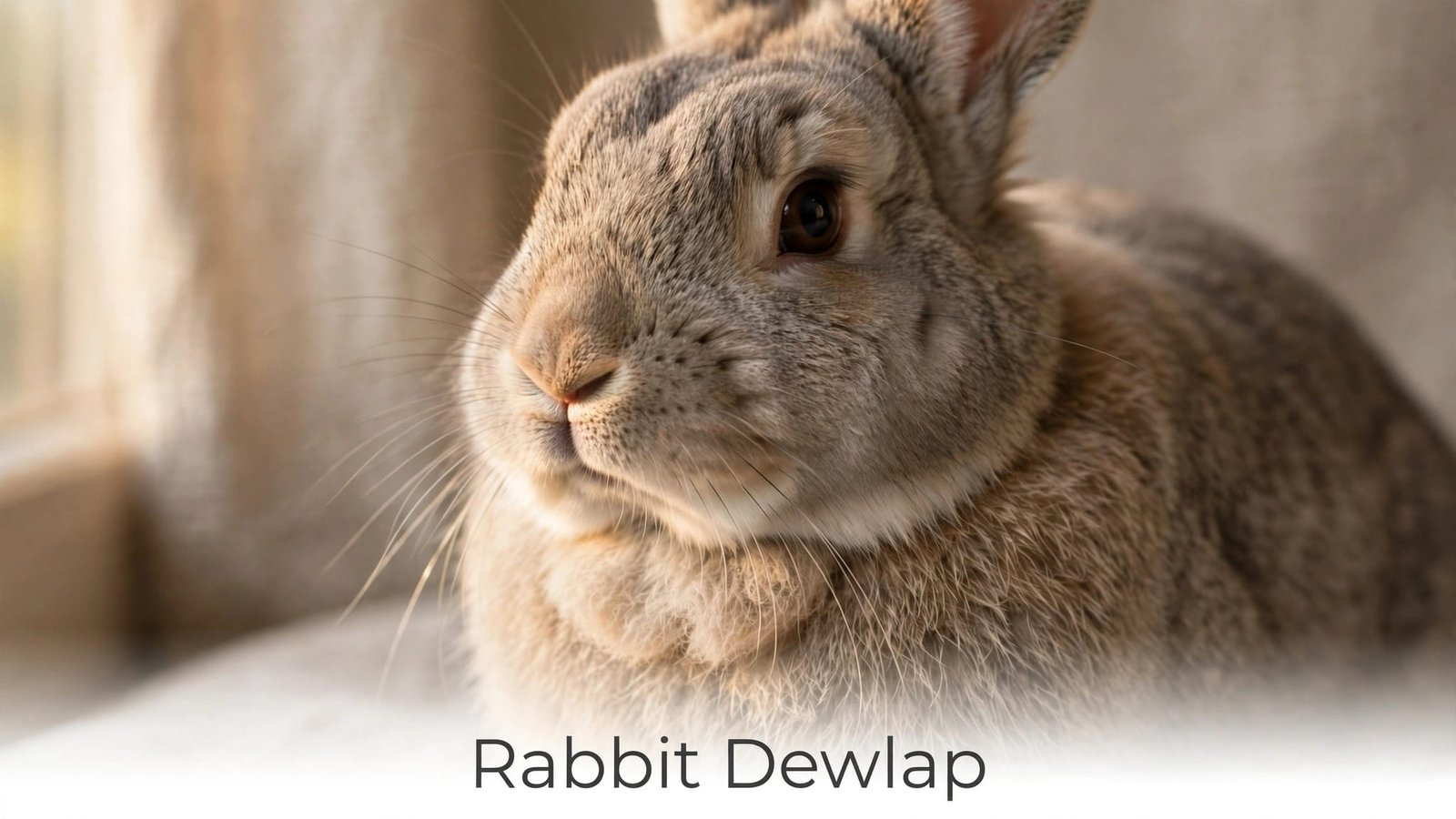
Your bunny’s fluffy double chin (sometimes jokingly called a fupa) usually has a simple explanation.
A rabbit dewlap is a normal fold of loose skin and fatty tissue beneath the chin. Female rabbits pull soft fur from it during pregnancy or false pregnancy to line a warm nest for their babies.
Its size depends on your rabbit’s sex, breed, hormones, and body condition. Knowing what’s normal helps you enjoy that adorable chin fluff while spotting changes that need attention.
Key Takeaways for Bunny Owners
- A soft, dry dewlap is usually a normal part of your rabbit’s body.
- Female rabbits often have larger dewlaps, but males can develop them too.
- Persistent dampness, sore skin, unusual lumps, or changes in eating need veterinary attention.
What Does a Rabbit Dewlap Do?
The dewlap hangs beneath your rabbit’s chin or throat. Depending on your bunny, it might look like a small fold or a generous furry cushion.
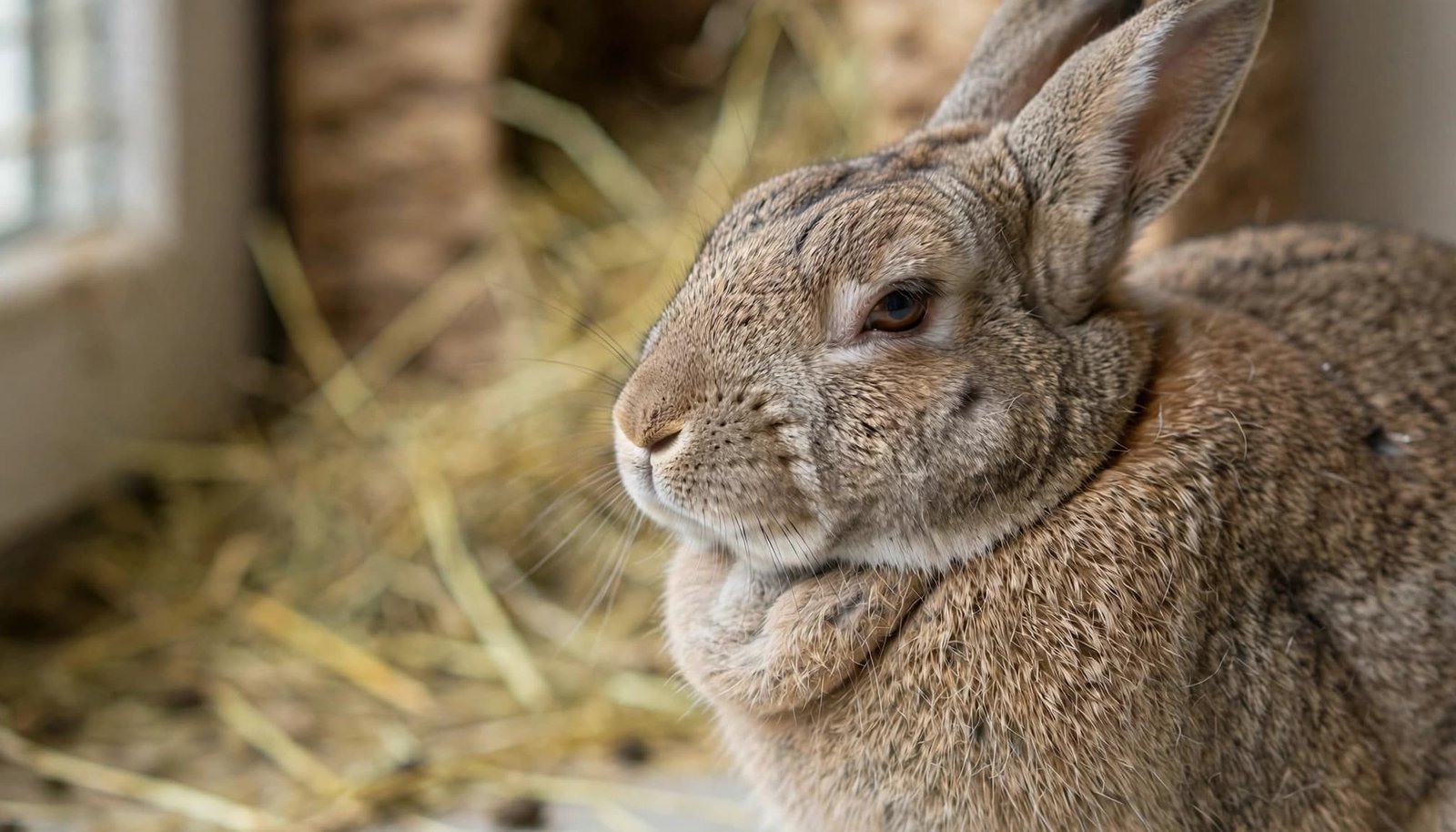
Its best-known purpose is nest building. A female rabbit, called a doe, pulls fur from her dewlap, chest, and belly to create soft bedding. That fur helps insulate newborn rabbits, called kits.
You may also see fur-pulling during a false pregnancy, when hormonal changes trigger nesting without babies developing. Nest building alone doesn’t tell you whether your rabbit is pregnant.
Which Rabbits Develop a Dewlap?
Females, males, and neutered rabbits
Dewlaps are most noticeable in mature female rabbits. However, your male rabbit, called a buck, can have one too, including after neutering.
Larger rabbits and some lop breeds may develop noticeable folds beneath the chin. Obesity can contribute to a larger dewlap in either sex, but the fold alone can’t show whether your rabbit is overweight.
Your veterinarian can assess overall body condition rather than judging that fluffy fold by itself.
Age and breed differences
You may notice a dewlap developing around seven months, although timing varies. It isn’t a reliable marker of sexual maturity, and some rabbits never develop a prominent one.
Flemish Giant rabbits and some rabbits from Rex breeds naturally have larger dewlaps. Smaller breeds may have only a subtle fold.
Compare your rabbit with their own usual appearance. A gradual change during development is different from sudden swelling.
How Should a Healthy Dewlap Feel?
A healthy dewlap generally feels like a soft, movable roll of skin and fat. The fur should be dry, and the skin underneath shouldn’t look red, crusty, or sore.
During gentle grooming, look for fur loss and skin irritation, especially inside the folds. Keep checks brief and comfortable. You don’t need to squeeze or repeatedly handle the area.
A separate lump, hard mass, or sudden one-sided swelling needs a rabbit-savvy veterinarian’s assessment. Tumors and other conditions can feel alike, so touch alone can’t identify a lump.
Your bunny’s comfort matters too. Pulling away from previously comfortable touch can be a sign that something hurts.
Why Wet Dewlap Needs Attention
Water and drooling can irritate the skin
A low-hanging dewlap can dip into water bowls whenever your bunny drinks. Repeated soaking can leave matted fur that stays damp. You may notice an unpleasant smell, redness, or irritated skin.
Constant moisture can lead to painful dermatitis, meaning skin inflammation, sometimes with bacterial or fungal infection.
The Merck Veterinary Manual’s dewlap guidance also identifies drooling from dental problems as a cause of wetness. A wet chin alongside dropping food, avoiding hay, or choosing soft foods deserves prompt veterinary attention.
Keep the fold dry without limiting water
Try a heavy, stable bowl raised just enough to keep the fold clear while your rabbit drinks comfortably. A securely cage-mounted water bottle is another option if your bunny uses it reliably. Always keep fresh water available.
Gently brush the dewlap regularly to prevent matting. Don’t pull tight knots or cut close to the skin. Our guide to removing rabbit fur mats safely explains when to get help.
For most healthy adults, a high-fiber diet of unlimited grass hay, suitable greens, and measured pellets supports a healthy weight. Avoid excess pellets and sugary treats. Our rabbit feeding basics for beginners can help you build that routine.
A persistently wet dewlap needs its cause addressed. Drying the fur won’t fix ongoing drooling or sore skin.
If your rabbit stops eating or produces noticeably fewer droppings, seek urgent veterinary advice. Don’t wait overnight for improvement.
Frequently Asked Questions About Rabbit Dewlaps
Does early spaying reduce dewlap size?
Early spaying can limit how large a female rabbit’s dewlap becomes. Some spayed females still develop one, and spaying doesn’t reliably remove a fold that’s already there.
Your rabbit’s health and appropriate surgical timing matter more than changing her appearance. Discuss spaying with a veterinarian who regularly treats rabbits.
What nicknames do owners use?
Rabbit owners have plenty of affectionate names for this little fold! You might hear “snuggle pouch,” “travel pillow,” “royal lump,” “frattle,” “neck chub,” or “fupa.”
Whatever you call your bunny’s chin fluff, give it the same gentle attention as the rest of their coat.
A Comfortable Dewlap Is Usually Nothing to Worry About
Your rabbit’s dewlap is usually a normal feature, especially in an adult female. Size alone doesn’t tell you whether there’s a health problem.
Focus on dry fur, comfortable skin, and normal eating habits. Add a gentle chin check to grooming time, and get veterinary help for persistent wetness, soreness, or a new lump.