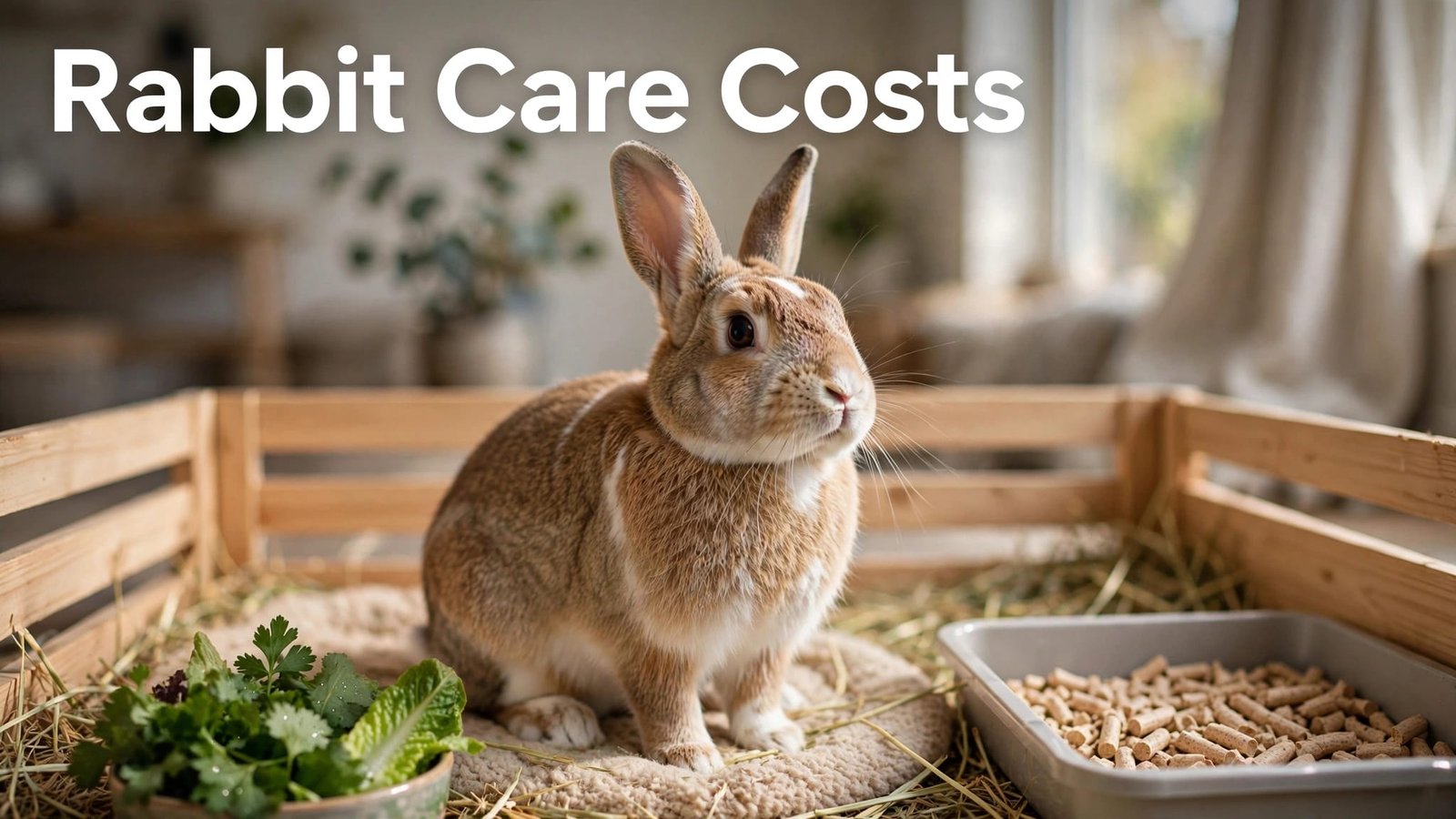
For one rabbit, budget about $65-$170 a month for food and litter, plus veterinary care. A complete first-year rabbit care cost budget can reach roughly $1,550-$4,200 when adoption, supplies, and initial medical expenses are included.
These are US-dollar planning ranges, not a fixed price for every bunny. Your location, your rabbit’s size, and their health needs all affect the total.
Monthly expenses are easier to plan for when you separate routine costs from setup expenses and veterinary bills.
Initial Rabbit Setup Costs
Basic housing and supplies cost about $150-$300. A larger enclosure or additional bunny-proofing can increase the initial setup cost.
Adoption or buying your bunny
Triangle Rabbits lists an adoption fee of $35-$75, while Chewy gives a broader range of $85-$450. Adoption can offer good value when the fee includes spaying or neutering and an initial health assessment.
Chewy lists breeder prices of $885-$1,490. That purchase price doesn’t replace your housing, food, or veterinary budget.
For a first-time owner, an already-neutered rescue rabbit can make planning simpler. Our guide to bringing home your first rabbit covers the daily care behind those purchases.
Housing and supplies
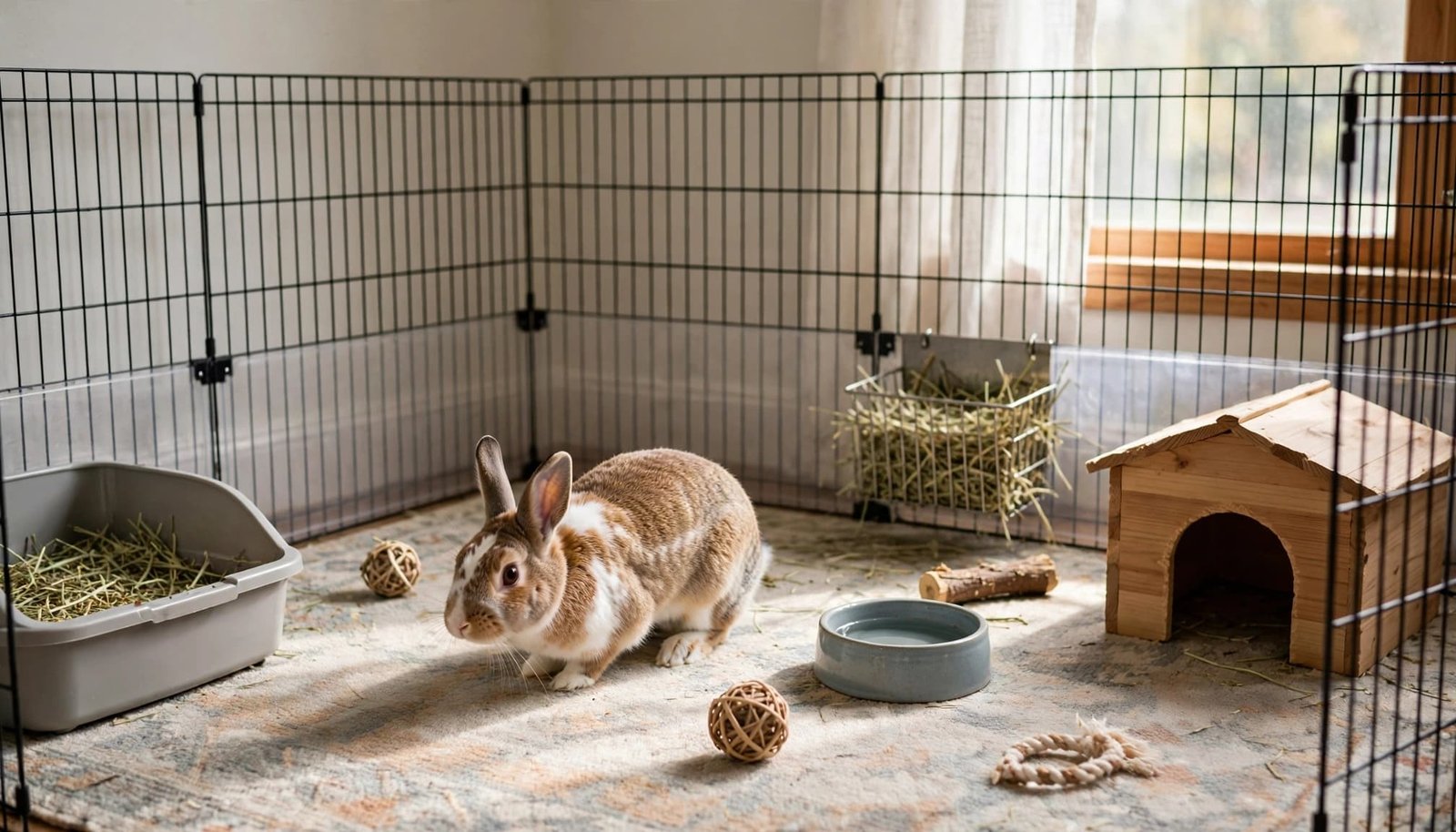
A roomy exercise pen gives your bunny space to move, stretch, and rest. A small starter cage can become an expensive purchase if you soon need to replace it. A cage alone may not provide enough room for many rabbits.
These published ranges show how equipment choices affect setup costs.
| Setup item | Estimated cost | Source |
|---|---|---|
| Exercise pen | $55-$85 | Triangle Rabbits |
| Exercise pen | $120-$250 | Rabbit Hole Hay |
| Cage | $50-$300 | Chewy |
| Litter box | $8-$30 | Triangle Rabbits and Chewy |
| Bunny-proofing supplies | $25-$75 | Triangle Rabbits and Chewy |
Choose suitable space rather than the cheapest enclosure. You’ll also need bowls, a carrier, a hiding place, bedding or comfortable flooring, and basic grooming supplies. Your bedding and flooring choices also affect which supplies you’ll need.
Monthly Rabbit Care Cost: Food and Litter
Food and litter are your most predictable monthly expenses. Chewy’s ranges provide a useful starting point for one rabbit.
| Monthly expense | Estimated cost |
|---|---|
| Hay | $20-$50 |
| Plain rabbit pellets | $13-$26 |
| Fresh greens | $20-$50 |
| Litter | $8-$40 |
| Food and litter total | $61-$166 |
Rounding that to $65-$170 makes everyday budgeting easier. Toys, replacement supplies, insurance, and veterinary care are additional expenses.
Keep hay at the center
Chewy describes hay as about 80%-90% of the diet, with fresh greens around 20%. These are rough feeding descriptions, not exact percentages to add together.
For most healthy adults, keep grass hay available throughout the day. Its fiber supports digestion, and chewing helps wear down continuously growing teeth.
Offer suitable leafy fresh greens and measured plain pellets alongside it. Skip colorful mixes containing seeds or sugary pieces. Our rabbit hay requirement calculator provides a starting point for planning supplies, while hay should remain freely available.
Why food prices vary
Triangle Rabbits budgets $35 monthly for hay, $12 for pellets, and $40 for greens. Different package sizes, local produce prices, delivery charges, and rabbit appetites explain much of the variation.
Bulk hay can cost less per pound than small pet-store bags. Savings depend on having clean, dry storage and using it before quality declines.
Wash greens and introduce unfamiliar foods gradually. Buying smaller amounts more often can reduce spoiled produce.

Routine Veterinary Care and Spay or Neuter Costs
Chewy estimates first-year veterinary care at $620-$1,430 and average yearly veterinary spending at $580-$630.
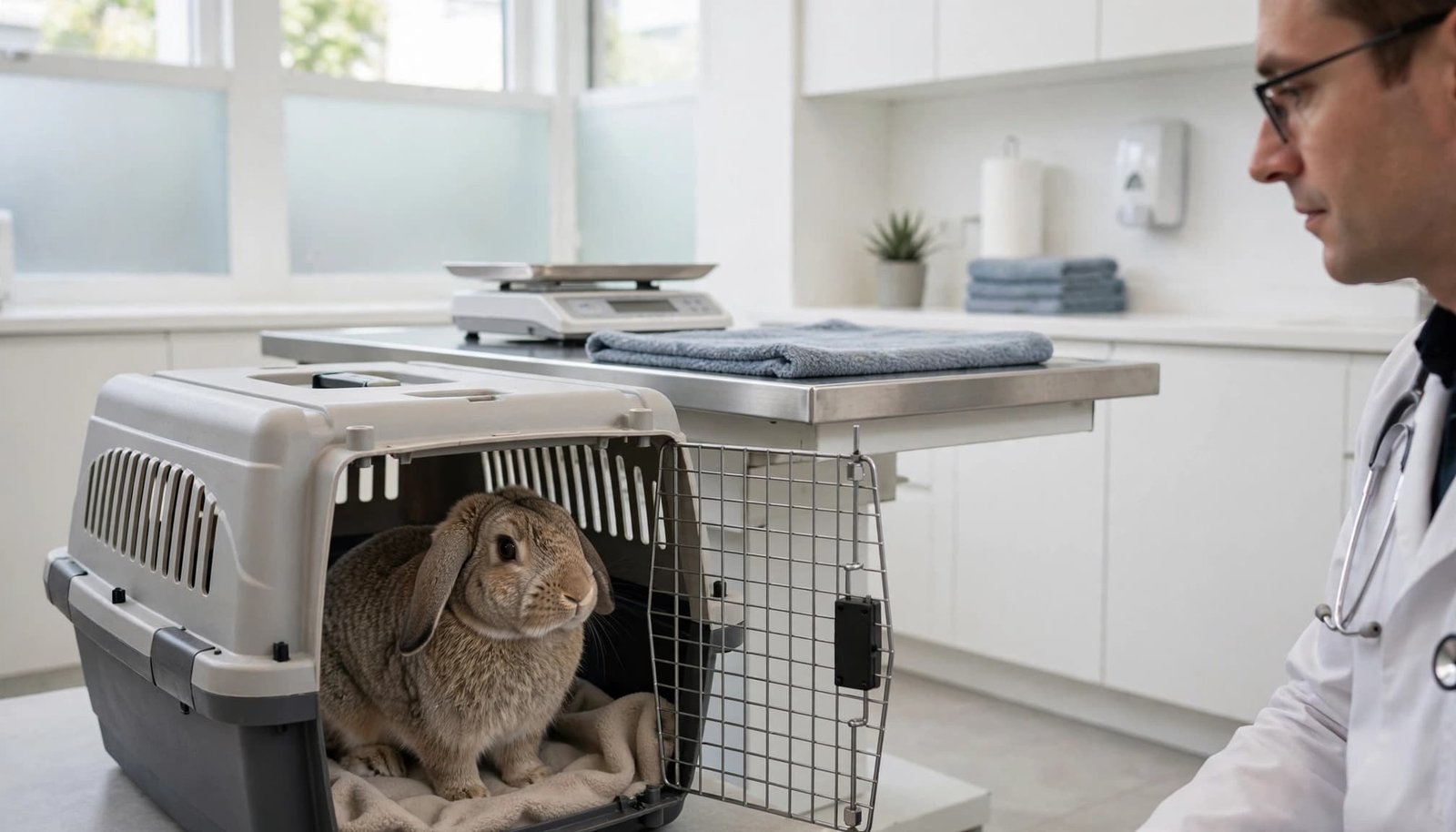
Your bunny needs a rabbit-savvy vet, often an exotic-pet vet. Many general practices have limited rabbit experience. Our guide to choosing a rabbit-savvy veterinarian explains what appropriate rabbit care involves.
Is spaying or neutering worth the cost?
Spaying or neutering prevents unwanted litters and can reduce hormone-related behaviors. Spaying also reduces the risk of uterine disease in female rabbits.
Published estimates for spay neuter surgery vary widely: Triangle Rabbits lists $250-$600, Rabbit Hole Hay lists $150-$500, and Chewy lists $500-$1,200.
Location, surgical complexity, and included services help explain that spread. CareCredit’s rabbit neutering guide also describes lower-cost options available in some areas.
If your adopted rabbit is already neutered, that expense may be included in the adoption price.
Checkups and RHDV2 vaccination
Triangle Rabbits lists an annual physical at $75-$200 and RHDV2 vaccination at $95. Chewy gives $30-$100 per vaccine dose and around $30 for yearly boosters.
RHDV2 is a serious rabbit disease, so discuss vaccination with a rabbit-experienced vet. Initial vaccine appointments may cost more than later boosters.
A healthy checkup year can cost less than the broader annual veterinary estimate. Dental treatment, testing, or ongoing medication can increase it.
Emergency Vet Bills Need Their Own Budget
An emergency vet consultation may cost $150-$300, while surgery or extended treatment can cost $1,000-$4,000, according to Chewy.
The consultation fee is only the starting point. Tests, medication, hospitalization, and procedures can add to the bill.
An emergency consultation price doesn’t tell you the total treatment cost. Keep emergency money separate from your normal food and litter budget.
A $1,000 emergency fund is a helpful start, but serious treatment can cost more. Add to the fund regularly, even during healthy months.
If your rabbit stops eating, produces fewer droppings, or appears to be in pain, contact a rabbit-savvy vet promptly. Waiting to save money can put your bunny at greater risk.
Good daily care supports health, but it can’t prevent every illness. Rabbits with chronic dental or digestive problems may need repeated treatment rather than one isolated visit.
Rabbit Insurance or an Emergency Savings Fund?
Insurance and savings solve different parts of the same problem. Insurance can reduce eligible treatment costs, while savings help you pay the clinic and cover excluded expenses.
What rabbit insurance covers
Rabbit.org’s veterinary payment resources identifies Nationwide as the only US insurer offering rabbit coverage in all 50 states. It describes a plan with a $250 annual deductible, a $10,000 annual limit, and 70% or 50% reimbursement.
Those figures describe the listed plan, not every policy nationwide. Available terms vary by state and policy.
Nationwide’s rabbit insurance information describes coverage for rabbit-related illnesses, including intestinal obstructions and overgrown teeth, subject to policy terms.
The plan described by Rabbit.org excludes pre-existing conditions and routine wellness services, including spay/neuter surgery and RHDV2 vaccination. Premiums are another monthly expense, and reimbursement still leaves you with part of the bill.
Savings and payment options
An emergency fund has no claim exclusions, but you can only spend what you’ve saved. Insurance may help with a larger eligible bill, though you’ll generally need money available before reimbursement.
Using both provides more flexibility than relying on either alone.
CareCredit and Scratchpay offer payment options at participating clinics. CareCredit promotional financing can avoid interest when the qualifying balance is paid in full within the promotional period. Missing that deadline can trigger deferred interest.
Financing creates repayments rather than reducing the treatment price. Local shelters and humane societies may also offer lower-cost spay/neuter programs.
A Clear First-Year and Annual Rabbit Budget
Combining the published ranges gives a fuller picture of the total rabbit care cost than considering one expense alone.
This calculation covers one adopted rabbit and excludes emergencies, insurance, boarding, and extra purchases.
| Budget category | Annual or one-time amount |
|---|---|
| Food and litter for 12 months | $732-$1,992 |
| Typical yearly veterinary allowance | $580-$630 |
| Ongoing annual total | $1,312-$2,622 |
| Basic initial setup | $150-$300 |
| Adoption fee | $35-$450 |
| First-year veterinary care | $620-$1,430 |
| First-year total, using first-year vet care instead | $1,537-$4,172 |
For practical planning, budget roughly $1,550-$4,200 in the first year and $1,300-$2,650 in later years, before unexpected bills.
Published totals count expenses differently. Chewy gives $865-$2,195 for first-year supplies and veterinary care, alongside an average annual keeping estimate of $1,672-$3,354. These aren’t interchangeable all-in budgets.
An already-neutered adopted rabbit may cost less initially. A rabbit needing specialist treatment may cost considerably more.
Easy Ways to Reduce Costs Safely
You don’t need fancy accessories to give your bunny a comfortable home. Spend first on suitable housing, good food, and experienced veterinary care.
Buying hay in larger quantities can help when storage is dry and the hay stays fresh. Compare the price per pound, including delivery, rather than the bag price alone.
Plan greens around produce your rabbit already tolerates. Our rabbit weekly meal planner can help organize shopping and reduce unused food.
Plain cardboard boxes can provide inexpensive hiding and exploring opportunities when they have no staples, tape, or plastic your rabbit could swallow. Supervise use and remove damaged materials.
Keep some room in the budget for travel care, too. If you’re away, your bunny needs someone to provide fresh food, clean water, litter care, and health observations.
Key Takeaways for New Rabbit Owners
- Budget around $65-$170 monthly for food and litter, with veterinary expenses added separately.
- Adoption can reduce upfront spending when surgery and initial care are included.
- Keep emergency savings available, even if your rabbit has insurance.
A clear rabbit care cost budget makes it easier to provide steady care without treating every purchase as a surprise.
Conclusion: Plan for Daily Care and Vet Bills
Your rabbit’s everyday needs are manageable when you budget for food, litter, and suitable housing. Routine veterinary care deserves its own allowance, separate from emergency savings for unexpected vet bills.
We want the first months with your bunny to feel welcoming and prepared. Planning beyond the cost of bringing your rabbit home gives your furry friend a stronger start.
Frequently Asked Questions About Rabbit Costs
Is a rabbit an inexpensive pet?
A rabbit can have affordable everyday supplies, but veterinary care makes ownership a serious financial commitment. A low adoption fee doesn’t mean low lifetime costs.
Plan for recurring purchases, regular medical care, and possible emergency treatment. Older rabbits or those with ongoing health conditions may need a larger veterinary allowance.
Can I leave my rabbit alone for two days?
No. Arrange a reliable caregiver who can provide fresh food and water, clean the litter area, and observe your rabbit daily.
A full hay rack doesn’t show whether your bunny is eating. Changes in appetite or droppings need prompt attention. Include sitter costs in your travel budget rather than leaving your rabbit unattended to save money.