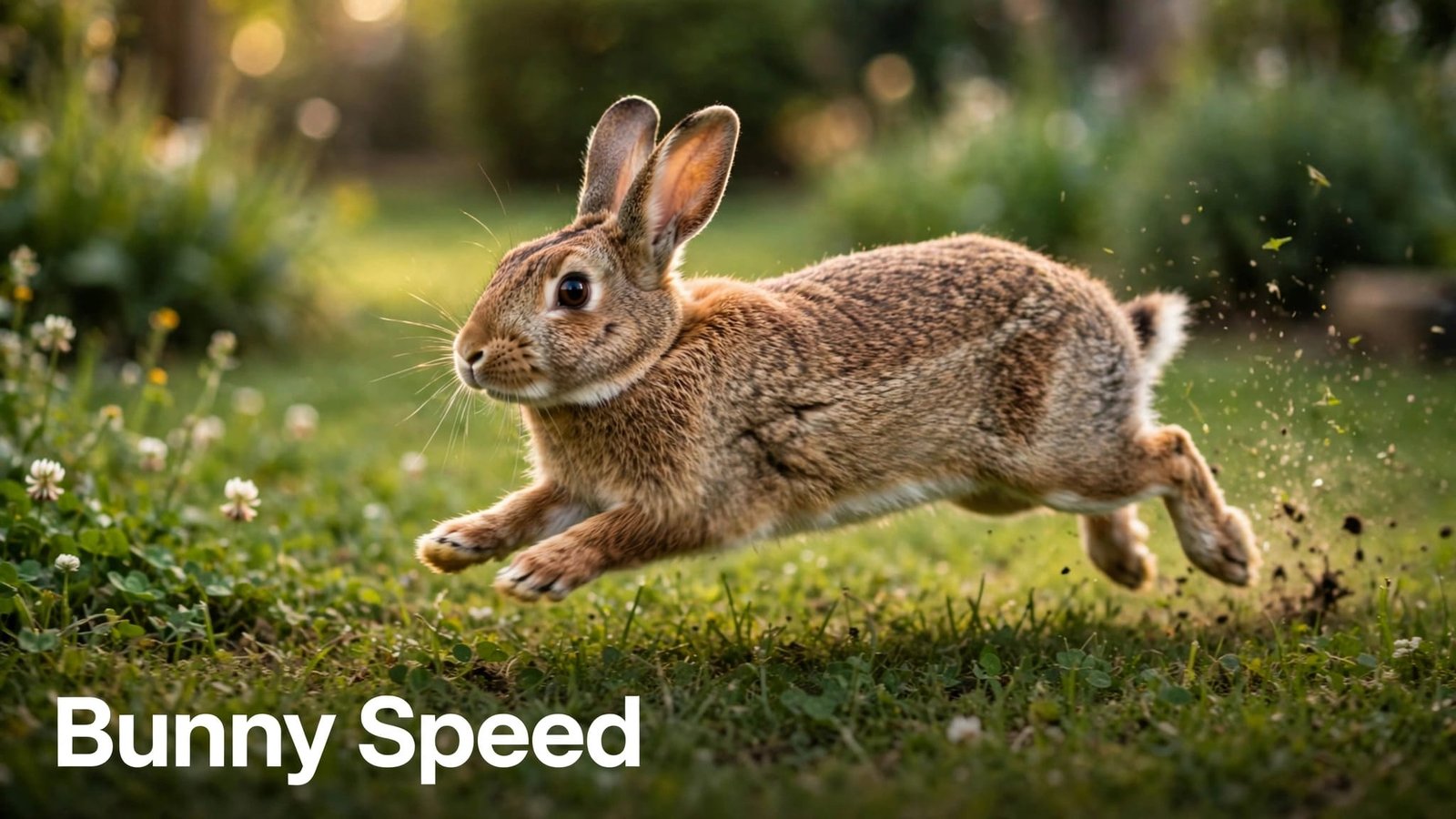
Your bunny’s gentle hopping can turn into a surprisingly quick dash.
Some rabbits can sprint at around 30 mph (48 km/h), although species and individual ability matter. Your pet’s everyday hopping and playful running are usually much slower than a full-speed escape.
Knowing what affects rabbit running speed helps you understand your furry friend’s movements and make playtime safer.
Key Takeaways
- Published top speeds are estimates, not a target your pet needs to reach.
- Hares and jackrabbits are different animals from your domestic bunny.
- Clear running space, comfortable footing, and freedom to rest matter more than speed.
How Fast Is a Rabbit’s Running Speed?
Rabbit speed figures describe different animals and conditions. A wild rabbit escaping danger and your bunny exploring the living room aren’t doing the same thing.
Why do speed estimates differ?
Bunny Lady’s rabbit speed guide gives an average maximum of around 30 mph. Treat that as a general estimate, rather than a measured speed for every pet rabbit.
Species-specific figures can be lower. A-Z Animals lists the eastern cottontail’s maximum speed at about 18 mph. That difference helps explain why a single number doesn’t describe every rabbit.
Top speed also differs from normal movement. Your bunny spends plenty of time walking, hopping, investigating, and resting between bursts of activity.
Are hares faster than rabbits?
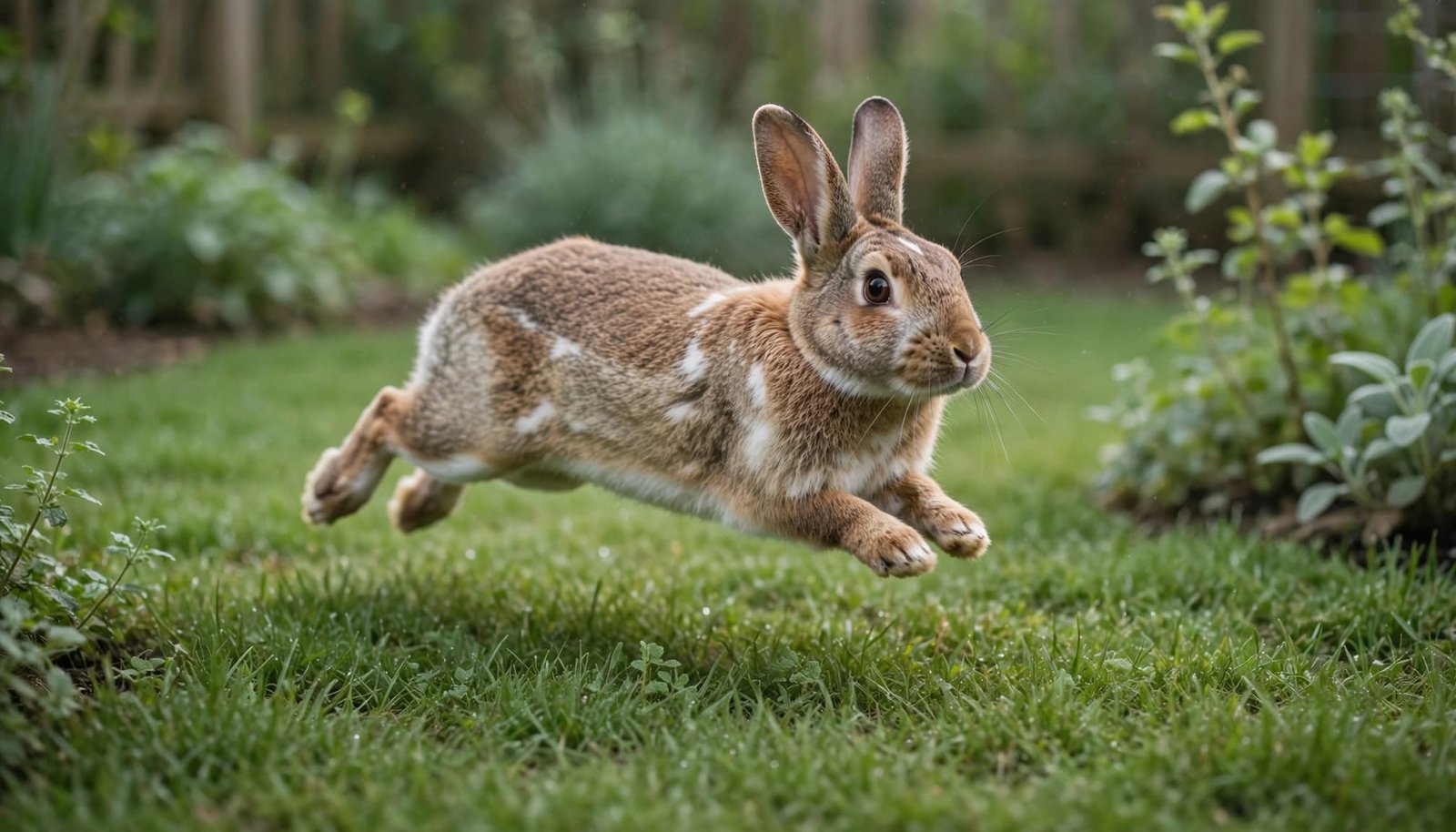
Hares generally have longer legs and are built for fast movement across open ground. Jackrabbits are hares, despite their name.
Wikipedia’s hare and jackrabbit overview reports speeds of about 40 mph for jackrabbits. Those figures shouldn’t become expectations for your house rabbit.
For a new owner, the useful distinction is simple: a headline about a speedy jackrabbit doesn’t tell you how quickly your pet should run.
What Helps Your Bunny Move Quickly?
Your rabbit’s body supports quick acceleration and bounding movement. Their age, comfort, and health also affect how they use those abilities.
Strong back legs provide the push
Your bunny’s muscular hind legs push against the ground to move the body forward. The front legs help support the landing before the next bound.
That movement gives rabbits their familiar hopping pattern. During faster running, the body stretches and gathers with each stride.
Quick changes of direction also help wild rabbits avoid predators. Around your home, those same movement skills can appear during a lively lap around a clear play area.
Age and health affect activity
Young, healthy rabbits often have more energetic play sessions than older bunnies. However, personality matters too. A quieter rabbit doesn’t automatically have a problem.
Joint discomfort, excess weight, injuries, and sore feet can make movement harder. Watch for changes in your own rabbit’s usual habits rather than comparing them with another bunny.
If your rabbit suddenly limps, avoids moving, or struggles to get up, contact a rabbit-experienced veterinarian.
Why Does Your Rabbit Suddenly Race Around?
Sudden laps, sharp turns, and short sprints are often called zoomies. Your bunny may also add a binky, a jump with a mid-air twist or kick.
These bursts often happen when rabbits feel playful or excited. Morning and evening activity fits their natural tendency to be most active around dawn and dusk.
Our guide to rabbit zoomies and playful running explains these familiar movements in more detail.
Look at what happens before and afterward. Relaxed exploring or grooming after a sprint suggests play. A dash after a loud noise may be an escape response.
Give a frightened bunny quiet space and access to a hideout.
Give Your Bunny Room to Run Safely
You don’t need a racetrack for a happy rabbit. You do need a living area that supports comfortable daily movement.
Leave a clear hopping route
For two bonded, average-sized rabbits, start with approximately 3 by 2 meters of continuous living space, with about 1 meter of height. One rabbit doesn’t need only half that area.
Measure the room left after adding hay, water, litter trays, and hideouts. Your bunny needs space for several uninterrupted hops, stretching, and resting.
Extra levels don’t replace horizontal floor space. Occasional garden sessions also don’t make cramped everyday housing suitable.
Our daily rabbit exercise guide helps you plan regular opportunities to move.
Make footing and boundaries comfortable
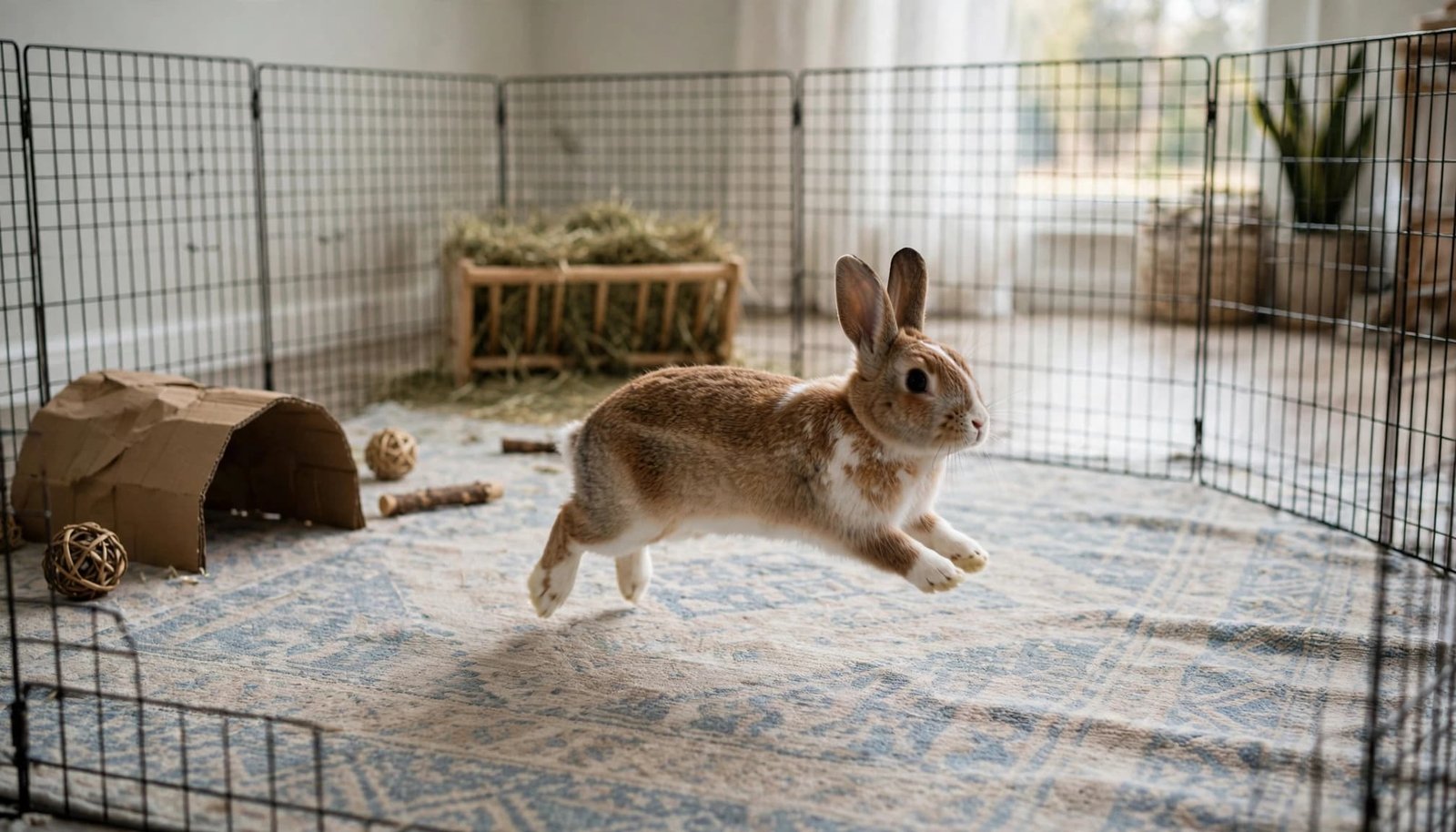
Use solid flooring with good traction. Secure, washable rugs can help on slippery floors, provided your rabbit doesn’t chew and swallow them. Remove loose threads and damaged coverings.
Protect electrical cords, remove unsafe plants, and block narrow gaps. Offer a cardboard hideout with two exits without crowding the main hopping route.
Let your bunny choose when to explore and stop. Chasing them to encourage exercise can cause fear.
Frequently Asked Questions About Bunny Speed
Can a rabbit run faster than a person?
Some rabbits can outrun most people over a short distance. Your pet’s actual pace depends on their condition, surroundings, and reason for running.
Should you time your rabbit’s running speed?
There’s no care benefit to testing maximum speed. Watch for comfortable, balanced movement instead, and let your bunny set the pace.
Is it normal for a rabbit to rest after running?
Yes. Short bursts followed by rest are normal. Open-mouth breathing, collapse, or obvious breathing difficulty need urgent veterinary attention.
Help Your Bunny Move With Confidence
Rabbit running speed is a fun fact, but your pet doesn’t need to reach a particular number. Comfortable movement and familiar activity patterns tell you more about everyday wellbeing.
Give your bunny usable space, supportive footing, and the choice to run or rest. Those simple basics help your long-eared friend enjoy playtime at their own pace.
Also see our article on Safer & Roomier Setups for outdoors.